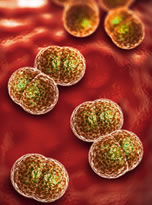


Quick Facts:
As many as 20 percent of all people carry the bacteria in the back of the nose and throat at any given time, especially in the winter, but remain healthy and asymptomatic. Transmission of the bacteria requires exchange of saliva or nasal secretions between people and so kissing, sharing eating utensils and other close personal contact is required.
Food & Drug Administration (FDA)
Centers for Disease Control (CDC)
Search for Vaccine Reactions
NVIC is proud to host
MedAlerts, a powerful VAERS database search engine. MedAlerts examines symptoms, reactions, vaccines, dates, places, and more.
Reporting a Vaccine Reaction
Since 1982, the NVIC has operated a
Vaccine Reaction Registry, which has served as a watchdog on VAERS. Reporting vaccine reactions to
VAERS is the law. If your doctor will not report a reaction, you have the right to report a suspected vaccine reaction to VAERS.
Vaccine Reaction Symptoms & Ingredients
Inflammation of the membranes that cover the brain and spinal cord is referred to as meningitis or, sometimes, spinal meningitis. Meningitis is usually caused by a viral or bacterial infection and treatments differ, depending upon whether the meningitis is caused by a virus or bacteria.
Viral or asceptic meningitis is generally less severe and has few complications. Bacterial meningitis, referred to as meningococcal disease, can involve serious complications that end in chronic brain dysfunction or even death.
Meningococcal disease is a bacterial infection that occurs rarely in the United States. Out of the U.S. population of 308 million people, meningococcal disease is estimated to affect between 1400 and 3000 American children and adults (.05-1.1 per 100,000) every year.
Death is estimated to occur in 10-14 percent of victims and leave 11-19 percent with chronic disability, including brain damage and loss of limbs. There are 13 meningococcal organism subgroups and five serotypes are responsible for nearly all cases of the disease worldwide: A, B, C, Y and W-135. Serotypes B, C and Y cause the majority of all cases in America.
As many as 20 percent of all people carry the bacteria in the back of the nose and throat at any given time, especially in the winter, but remain healthy and asymptomatic. Transmission of the bacteria requires exchange of saliva or nasal secretions between people and so kissing, sharing eating utensils and other close personal contact is required.
It is unknown why only a very small number of people, who carry or come into contact with meningococcal bacteria, develop serious disease. Factors that affect the immune system’s ability to fight off infection are important and people at increased risk for the disease are those living in crowded and unsanitary conditions such as prisons; those with chronic illness or who have had recent respiratory infections; and those who drink alcohol and smoke or are exposed to smoke.
Symptoms of meningococcal disease can develop and move quickly:
- high fever;
- severe headache;
- neck stiffness and pain, especially when attempting to touch chin to chest;
- nausea and vomiting;
- extreme fatigue;
- unconsciousness;
- confusion;
- irritability;
- inability to look at bright lights;
- convulsions
In babies symptoms of meningococcal disease are very similar to symptoms of brain inflammation complications after vaccination: high pitched screaming with arching back; staring expression; cold hands and feet; bulging fontanel, and unresponsiveness or inabilityto wake the baby.
Early diagnosis and antibiotic treatment of meningococcal disease are key to preventing severe complications that end in death and disability.
Three pathogens(organisms) are associated with 80%of cases of bacterial meningitis: Hemophilus influenza type b, Streptococcus pneumoniae (pneumococcus) and Neisseria meningitidis (meningococcus).
Haemophilus influenzae type b was the most commonly diagnosed bacterial meningitis in the United States in the 20th century and nearly all cases occur in children under age six. The H. influenzae type b (HIB) vaccine was introduced in 1988 for toddlers and, in 1991, for infants and is recommended by the CDC for children at two, four, six and 12-15 months.
Pneumococcal meningitis caused by Streptococcus pneumoniae is most frequently observed in adults over the age of 30 years but also can affect children. 84 different serotypes of S. pneumonia have been identified that are associated with bacterial pneumonia, pneumococcal meningitis, endocarditis, otitis media (middle ear infection), mastoiditis, sinusitis and conjunctivitis.
A pneumococcal vaccine containing 23 strains of pneumococcal is recommended by the CDC for adults over age 65. A pneumococcal vaccine containing 7 strains of pneumococcal was introduced in 2000 and recommended by the CDC for children at two, four, six and 12-15 months. A new version containing 13 pneumococcal strains was introduced in 2010.
Meningitis associated with Neisseria meningitidis is most often encountered in children and young adults. In 2005, a meningococcal vaccine was recommended by the CDC for 11 year olds and college students, especially freshman living in dorms on campuses. In 2010, the CDC expanded meningococcal vaccine recommendations to include a booster dose of meningococcal vaccine for all 16 year olds in addition to the first dose given to all 11-12 year olds.
Following is an explanation by the CDC for why a booster dose of meningococcal vaccine was added in 2010 for all 16 year olds who had gotten their first dose at 11-12 years of age:
“When [meningococcal vaccine] was first recommended for adolescents in 2005, the expectation was that protection would last for 10 years; however, currently available data suggest it wanes in most adolescents within 5 years. Based on that information, a single dose at the recommended age of 11 or 12 years may not offer protection through the adolescent years at which risk for meningococcal infection is highest (16 though 21 years of age). If we didn’t recommend a booster dose, adolescents at highest risk would not be well protected.”
There are three meningococcal vaccines licensed in the U.S.: Menactra (Sanofi Pasteur), which can be give to individuals between the ages of two and 55 years; Menomune (Sanofi Pastuer), which can be given to individuals over two years old; and Menveo (Novartis), which can be given to individuals between the ages of 11 and 55 years.
Links to meningococcal vaccine product Information Inserts describing vaccine ingredients; pre-licensure clinical trials and reported side effects are available in the Reference section below.
Reported Meningococcal Vaccine Reactions:
The most commonly reported reactions following receipt of meningococcal vaccine include:
- swelling/redness at injection site;
- headache;
- fatigue;
- aching joints;
- diarrhea and vomiting;
- loss of appetite;
- chills & fever
More serious reported reactions have included:
- anaphylaxis;
- sudden collapse (vasovagal syncope);
- Guillain Barre Syndrome (GBS);
- Facial palsy;
- Brain inflammation (acute disseminated encephalomyelitis, transverse myelitis)
- convulsions;
- death
To review reported meningococcal vaccine reactions to the federal Vaccine Adverse Events Reporting System (VAERS),
click here.
Both meningococcal disease and meningococcal vaccination can involve serious health risks. An individual’s risk of contracting an infectious disease and dying or suffering long term health consequences depends upon the risk of exposure to the organism causing the disease; genetic susceptibility to developing disease complications; and general state of health that affects the ability of the immune system to mount an inflammatory response to the infection and effectively resolve inflammation so healing can take place.
Every vaccine – just like every other pharmaceutical product - carries a risk of injury or death and that risk can be greater for some individuals due to genetic, biological and other high risk factors. Like susceptibility to developing complications to infectious diseases, individual susceptibility to developing complications from vaccination is in part dependent upon the ability of the immune system to mount an appropriate inflammatory response and resolve inflammation so it does not become chronic and cause permanent brain and immune dysfunction or even death.
Menactra vaccine licensed in 2005 and marketed by Sanofi Pasteur was the first meningogoccal vaccine the CDC recommended for universal use by 11 year old children entering sixth grade and 18 year olds entering college. A dose of Menactra vaccine costs between $85 and $100 per shot.
Menactra protects against serotypes A, C, Y and W-135. However, the vaccine does not contain serotype B, which causes about one-third of all cases of meningococcal disease in the US. and more than 50 percent of cases in young infants. Therefore, in terms of preventing meningococcal disease in America, Menactra is ineffective 30 to 50 percent of the time, depending upon age.
Menactra was evaluated by Sanofi in about 7,600 individuals aged 11-55 years in clinical trials comparing Menommune and Menactra vaccines and were followed up for 7 days; 28 days and 6 months. Vaccine adverse reactions among 11-18 year olds in clinical trials cited in the product manufacturer insert include local pain, swelling and redness (10-59%); headache (35%); fatigue (30%); aching joints (17%); diarrhea (12%); loss of appetite (10%); chills and fever (5-7%); vomiting (2%); and rash (1%). There have also been reports of vasovagal syncope (collapse); facial palsy; transverse myelitis; urticaria, and musculoskeletal and connective tissue disorders, including myalgia, and death.
After five cases of Guillain Barre Syndrome were reported to VAERS in 2005, the FDA issued a warning for parents and doctors monitoring of vaccine recipients for signs of GBS. By October 2006, 15 cases of GBS had been reported. While federal health officials suggested the possibility of “a small increased risk of GBS” following receipt of Menactra, the implication was that most of the GBS cases occurring after Menactra were unrelated to the vaccine.
On August 15, 2007, the National Vaccine Information Center (NVIC) issued a report analyzing reports of GBS and other serious adverse events to VAERS after individuals received HPV (Gardasil) vaccine alone or administered simultaneously with Menactra.) NVIC found a more than 1,000 percent statistically significant increased risk of reports of GBS to VAERS when Gardasil was administered simultaneously with Menactra. When Menactra was given simultaneously with Gardasil, NVIC also found a statistically significant increased risk of reports of other serious adverse events to VAERS:
- Respiratory problem reports increased by 114 percent;
- cardiac problem reports increased by 118 percent;
- neuromuscular and coordination problem reports increased by 234 percent;
- convulsions and central nervous system problem reports increased by 301 percent;
- reports of injuries from falls after unconsciousness (vasovagal syncope) increased by 674 percent;
Menactra and Gardasil were never studied in clinical trials to evaluate safety when both vaccines were given simultaneously.
In 2000, before the CDC recommended the meningococcal vaccine for all 11-12 year olds in the U.S. and for all college students, an important report was published in the Morbidity & Mortality Weekly Report that acknowledged there is a
modestly increased risk for meningococcal disease among college students, particularly those who live in dormitories or resident halls.
Click here to review the 2000 CDC report on meningococcal disease in the U.S..
http://www.cdc.gov/mmwr/preview/mmwrhtml/rr4907a2.htm
The full CDC report outlines recommendations developed by the CDC’s Advisory Committee on Immunization Practices (ACIP), regarding the education of students and parents about meningococcal disease and the meningococcal vaccine to facilitate informed decision-making.
The following information is a summary from the 2000 CDC report:
Recent studies provide data concerning the risk of sporadic meningococcal disease among college students:
1- 1990-1991-A questionnaire designed to evaluate risk factors for meningococcal disease among college students was sent to 1900 universities, resulting in a 38% response rate. Forty-three cases of meningococcal disease were reported during the 2 years from colleges with a total enrollment of 4,393,744 students, for a low overall incidence of 1.0 per 100,000 population per year. However, cases of meningococcal disease occurred 9-23 times more frequently in students residing in dormitories than in those residing in other types of accommodations. The low response rate and the inability of the study to control for other factors make these results difficult to interpret.
2- 1992-1997 - A retrospective, cohort study conducted in Maryland identified 67 cases among persons aged 16-30 and were identified by active laboratory-based surveillance. Fourteen cases were among students attending Maryland colleges, and 11 were among those in 4-year colleges. The overall incidence rate in Maryland college students was similar to the incidence in the US population of persons the same age. Rates were elevated for students living in dormitories compared with students living off-campus.
3- 1998-1999 - US started to keep track of the disease in college students. In this time period 90 cases were reported to the CDC. These cases represent approximately 3% of the total cases that occur each year in the United States. Eighty-seven cases occurred in undergraduate students, and 40% occurred among the 2.27 million freshman students. Eight students died.
NVIC Note: This data suggests that the overall rate of disease among undergraduate college students is lower than the rate among persons aged 18-23 years who are not enrolled in college. Even though the rates were higher in freshmen students (4.6/100,000) living in dormitories, it was still lower than the threshold of 10/100,000 recommended for initiating meningococcal vaccination campaigns.
Fifty of the students were enrolled in a case-control study and the results showed that freshmen living in dormitories were at a higher risk for disease. In addition white race, radiator heat, and recent upper respiratory infection were associated with disease.
The American College Health Association (ACHA) recommends that college health services take a more proactive role in alerting students and their parents about the dangers of the disease and that college students consider vaccination and that colleges and universities ensure that all students have access to a vaccination program for those that want to be vaccinated.
Cost-effectiveness of Vaccinating College Students
Nationwide vaccination of freshmen who live in dormitories would result in the administration of 300,000-500,000 doses of vaccine each year, preventing 15-30 cases of disease and one to three deaths per year. The cost per case prevented would be $600,000- $1.8 million at a cost per death prevented of $7 million to $20 million.
Vaccination of all freshmen would result in the administration of 1.4-2.3 million doses of vaccine each year preventing 37-69 cases of disease and 2-4 deaths each year. The cost per case prevented would be $1.4-$2.9 million, at a cost per death prevented of $22 million to $48 million.
NVIC Note: These data suggest that for society as a whole, mandatory vaccination of college students with meningococcal vaccine is unlikely to be cost effective.
Based on the above information, in 2000 the CDC’s ACIP Committee made the following recommendations regarding the use of meningococcal vaccine in college students:
Providers to incoming or current college freshmen, particularly those living in dormitories should inform these students and parents about the disease and the vaccination. ACIP does not recommend that the level of increased risk among freshmen warrants any specific changes in living situations with freshmen.
College freshmen who want to reduce their risk for meningococcal disease should either be administered vaccine (by a doctor's office or student health service) or directed to a site where vaccine is available.
The risk for disease among non-freshmen college students is similar to that for the general population. However, the vaccine can be administered to non-freshmen undergraduates who want it.
Colleges should inform incoming and/or current freshmen, particularly those who plan to live or already live in dormitories or residence halls about meningococcal disease and the availability of the vaccine.
Public health agencies should provide college and health care providers with information about the disease and the vaccine as well as information regarding how to obtain the vaccine.
CENTERS FOR DISEASE CONTROL (CDC)
FOOD AND DRUG ADMINISTRATION (FDA)
NVIC SPECIAL REPORTS
ORGANIZATIONS
MEDIA REPORTS