
Below are brief introductions to Ebola disease and the Ebola vaccine with links to more information. Scroll down for a list of QUICK FACTS that provide a summary overview of key facts for the disease and the vaccine.
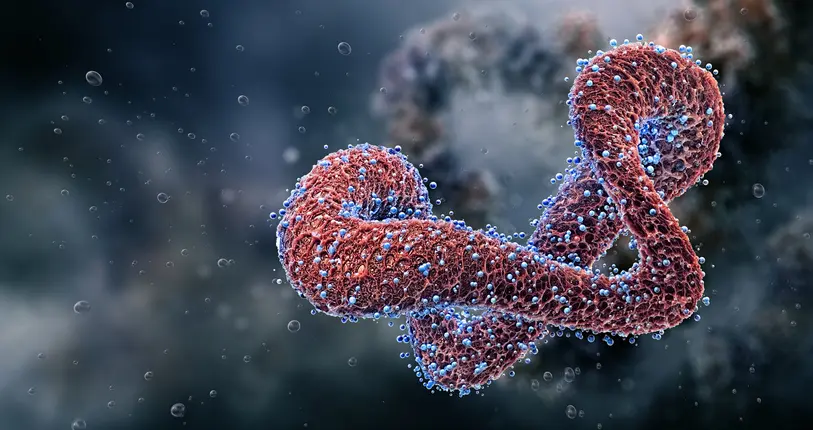
Ebola is a serious contagious viral disease with a high mortality rate.1 The natural reservoir for the virus is thought to be a fruit bat native to Africa. Both humans and non-human primates are susceptible to infection.2
Symptoms start with a fever, headache, muscle and stomach pain, diarrhea, vomiting, fatigue, weakness, skin bruising and bleeding. As the disease progresses, damage to the immune system as well as the body’s internal organs occur. White blood cell and platelet counts decrease and both internal and external bleeding can occur. Fatality rates from the disease have ranged from 25 to 90 percent but the average case fatality rate is estimated at 50 percent.34 A person can have the virus but not show any symptoms for as long as three weeks.5
Persons who survive Ebola virus disease develop long-term immunity; however, health problems frequently persist upon recovery.6
On December 19, 2019, the FDA approved ERVEBO (rVSV-ZEBOV), a genetically modified live Ebola virus vaccine for use in persons 18 years of age and older. This vaccine is manufactured by Merck and targets the Zaire ebolavirus strain.7 ERVEBO is a live, genetically modified Ebola virus vaccine and uses an attenuated vesicular stomatitis virus, a pathogen that infects livestock (cattle, horses, deer, pigs) with one of its genes replaced by an Ebolavirus gene.89
Adverse events reported during clinical trials of ERVEBO included: injection site pain, swelling, and redness; headache; fever; nausea; fatigue; muscle pain; joint pain, swelling, stiffness, warmth, and redness; abnormal sweating; rash; mouth ulcers; vesicular lesions; arthralgia; arthritis; anaphylaxis; cerebrovascular accident; hemorrhagic stroke; subarachnoid hemorrhage; pulmonary embolism; and death.10