Vaccines & Disease · Hib

What is Haemophilus Influenza Type B (HIB)?

3 min read

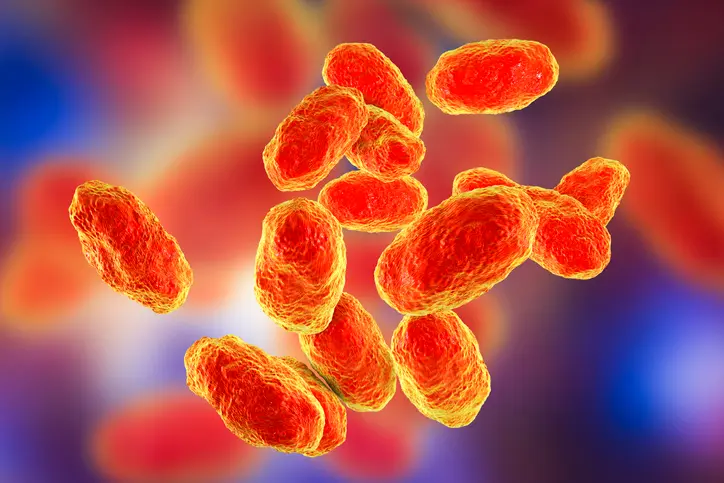
Haemophilus influenzae (H. influenzae) is a small gram-negative coccobacillus1 found only in humans2 and can be either encapsulated (typeable) or unencapsulated (nontypeable). Typeable H. influenzae contain a polysaccharide capsule and are identified and labeled with letters a through f. Strains that do not have a polysaccharide capsule are referred to as nontypeable. Current H. influenzae vaccines target only H. influenzae type b, which was believed to be the cause of 95 percent of all H. influenzae infections in the pre-vaccine era.3 Hib infections are more likely to occur between September and December and again between March and May.4

H. influenzae type b (Hib) is transmitted by direct contact with respiratory secretions and enters the body through the upper respiratory tract. While uncommon, H. influenzae type b and other types of H. influenzae infections can also be transmitted through the birth canal from an infected mother to her newborn baby.56 In most cases, Hib can remain in the mouth and nose for up to several months without causing illness.7 If Hib enters the bloodstream it becomes invasive and cause serious infections including meningitis, pneumonia, bacteremia, epiglottis, cellulitis, septic arthritis, osteomyelitis, otitis media, pericarditis, and endocarditis.8

A diagnosis of H. influenzae, including H. influenzae type b, is made by the laboratory testing of bodily fluids such as blood and spinal fluid.9

Prior to the introduction of the Hib vaccine in the mid-1980’s, H. influenzae type b was responsible for most cases of meningitis, a serious infection of the membranes that cover the spinal cord and brain, which is the most common clinical presentation of invasive disease.10 Before Hib vaccines became available, infections occurred nearly exclusively in children under the age of five, with the majority of infections occurring in children younger than eighteen months.11 Of note, Navajo and Native Alaskan Americans were found to have higher rates of the disease.12 H.influenzae invasive disease did not become a nationally notifiable disease until 1991,13 six years after the first Hib vaccines became available for use in the United States.14

Since the introduction of Hib vaccines, Hib meningitis has become more common in adults than in children.15 While the CDC reports a nearly 99 percent decrease in Hib invasive disease among children 5 years of age and younger,16 adults, especially seniors over the age of 65, have become more susceptible to the infection.1718 A 2011 published study on H. influenzae infections in Utah found that between 1998 and 2008, over 50 percent of H. influenzae infections and 67 percent of H. influenzae related deaths occurred in adults over the age of 65.19

In the United States, before Hib vaccines became available, approximately two-thirds of all cases of Hib invasive disease affected infants and children under 15 months of age20 and 85 percent of cases occurred in children under the age of five.21 Following the introduction of the Hib vaccine, the burden of invasive H. influenzae disease has shifted from children to adults, and most particularly seniors over the age of 65.2223 A 2011 published study found that between 1998 and 2008, 51 percent of invasive H. influenzae cases involved adults over the age of 65. Death rates from H. influenzae disease were also found to be significantly higher among seniors over age 65, with 67 percent of infections resulting in death.24

While invasive disease caused by H. influenzae type b (Hib) has decreased, invasive disease by non-b and nontypeable H. influenzae have increased.25262728293031323334 Non-b type infections, such as H. influenzae type a, can cause invasive disease with complications similar to Hib35 and nontypeable H. influenzae invasive illness, while most commonly associated with infections such as conjunctivitis, otitis media, sinusitis, and pneumonia, still has the potential to cause serious invasive H. influenzae disease.36 Hib vaccines target only H. influenzae type b and offers no protection against any other type of H. influenzae infection.37

IMPORTANT NOTE: NVIC encourages you to become fully informed about Haemophilus Influenzae Type B (Hib) and the Hib vaccine by reading all sections in the Table of Contents, which contain many links and resources such as the manufacturer product information inserts, and to speak with one or more trusted health care professionals before making a vaccination decision for yourself or your child. This information is for educational purposes only and is not intended as medical advice.

References
  1. 1Communication and Education Branch, National Center for Immunization and Respiratory Diseases (NCIRD) and the Centers for Disease Control (CDC). Haemophilus influenzae type b. Haemophilus influenzae Aug. 18, 2021.
  2. 2Communication and Education Branch, National Center for Immunization and Respiratory Diseases (NCIRD) and the Centers for Disease Control (CDC). Haemophilus influenzae type b. Haemophilus influenzae Aug. 18, 2021.
  3. 3Communication and Education Branch, National Center for Immunization and Respiratory Diseases (NCIRD) and the Centers for Disease Control (CDC). Haemophilus influenzae type b. Haemophilus influenzae Aug. 18, 2021.
  4. 4Communication and Education Branch, National Center for Immunization and Respiratory Diseases (NCIRD) and the Centers for Disease Control (CDC). Haemophilus influenzae type b. Haemophilus influenzae Aug. 18, 2021.
  5. 5Supram HS, Gokhale S, Bhatta DR, et al. Haemophilus influenzae type B genital infection and septicemia in pregnant woman: a case report. Asian Pac J Trop Dis. June 2014; 4(3): 207–209.
  6. 6Rathore MH. Pediatric Haemophilus Influenzae Infection. Medscape Dec. 14, 2021.
  7. 7Communication and Education Branch, National Center for Immunization and Respiratory Diseases (NCIRD) and the Centers for Disease Control (CDC). Haemophilus influenzae type b. Haemophilus influenzae Aug. 18, 2021.
  8. 8Communication and Education Branch, National Center for Immunization and Respiratory Diseases (NCIRD) and the Centers for Disease Control (CDC). Haemophilus influenzae type b. Haemophilus influenzae Aug. 18, 2021.
  9. 9US Centers for Disease Control and Prevention. Diagnosis, Treatment, and Complications. Haemophilus influenzae Mar. 4, 2022.
  10. 10World Health Organization. Haemophilus influenzae. Haemophilus influenzae. Sept. 18, 2018.
  11. 11Communication and Education Branch, National Center for Immunization and Respiratory Diseases (NCIRD) and the Centers for Disease Control (CDC). Haemophilus influenzae type b. Haemophilus influenzae Aug. 18, 2021.
  12. 12Rathore MH. Pediatric Haemophilus Influenzae Infection. Medscape Dec. 14, 2021.
  13. 13Communication and Education Branch, National Center for Immunization and Respiratory Diseases (NCIRD) and the Centers for Disease Control (CDC). Haemophilus influenzae type b. Haemophilus influenzae Aug. 18, 2021.
  14. 14Centers for Disease Control. Polysaccharide Vaccine for Prevention of Haemophilus Influenzae Type b Disease. MMWR Apr. 19, 1985.
  15. 15Nix EB, Hawdon N, Gravelle S, et al. Risk of invasive Haemophilus influenzae type b (Hib) disease in adults with secondary immunodeficiency in the post-Hib vaccine era. Clin Vaccine Immunol May 2012; 19(5):766-71.
  16. 16Centers for Disease Control and Prevention. Progress toward elimination of Haemophilus influenzae type b invasive disease among infants and children–United States, 1998-2000. MMWR Mar 22, 2002; 51(11):234-7.
  17. 17Rubach MP, Bender JM, Mottice S et al. Increasing Incidence of Invasive Haemophilus influenzae Disease in Adults, Utah, USA. Haemophilus influenzae 2011; 17(9): 1645–1650.
  18. 18Blain A, MacNeil J, Wang X, et al. Invasive Haemophilus influenzae Disease in Adults ≥65 Years, United States, 2011. Open Forum Infect Dis. 2014.
  19. 19Rubach MP, Bender JM, Mottice S et al. Increasing Incidence of Invasive Haemophilus influenzae Disease in Adults, Utah, USA. Haemophilus influenzae 17(9): 1645–1650.
  20. 20Broome CV. Epidemiology of Haemophilus influenzae type b Infections in the United States. Haemophilus influenzae Aug. 1987; 6(8):779-82.
  21. 21Rathore MH. Pediatric Haemophilus Influenzae Infection. Medscape Dec. 14, 2021.
  22. 22Mann D. Hib Disease Increasing Among Adults. WebMD Aug. 11, 2011.
  23. 23Blain A, MacNeil J, Wang X, et al. Invasive Haemophilus influenzae Disease in Adults ≥65 Years, United States, 2011. Open Forum Infect Dis. 2014.
  24. 24Rubach MP, Bender JM, Mottice S et al. Increasing Incidence of Invasive Haemophilus influenzae Disease in Adults, Utah, USA. Emerg Infect Dis. 2011; 17(9): 1645–1650.
  25. 25Bender JM, Cox CM, Mottice S, et al. Invasive Haemophilus influenzae disease in Utah children: an 11-year population-based study in the era of conjugate vaccine. Haemophilus influenzae Apr. 1, 2010.
  26. 26Waggoner-Fountain LA, Hendley JO, Cody EJ et al. The emergence of Haemophilus influenzae types e and f as significant pathogens. Clin Infect Dis. Nov. 1995; 21(5):1322-4.
  27. 27Rubach MP, Bender JM, Mottice S et al. Increasing Incidence of Invasive Haemophilus influenzae Disease in Adults, Utah, USA. Haemophilus influenzae 2011; 17(9): 1645–1650.
  28. 28McConnell A, Tan B, Scheifele D, et al. Invasive infections caused by haemophilus influenzae serotypes in twelve Canadian IMPACT centers, 1996-2001. haemophilus influenzae Nov. 2007; 26(11):1025-31.
  29. 29Urwin G, Krohn JA, Deaver-Robinson K et al. Invasive disease due to Haemophilus influenzae serotype f: clinical and epidemiologic characteristics in the H. influenzae serotype b vaccine era. The Haemophilus influenzae Study Group. Clin Infect Dis. June 1996; 22(6):1069-76.
  30. 30Ulanova M, Tsang RSW. Haemophilus influenzae serotype a as a cause of serious invasive infections. Haemophilus influenzae serotype a as a cause of serious invasive infections. Jan. 2014; 14(1):70-82.
  31. 31Bruce MG, Deeks SL, Zulz T et al. Epidemiology of Haemophilus influenzae serotype a, North American Arctic, 2000-2005. Emerg Infect Dis. Jan. 2008; 14(1):48-55.
  32. 32Adam HJ, Richardson SE, Jamieson FB et al. Changing epidemiology of invasive Haemophilus influenzae in Ontario, Canada: evidence for herd effects and strain replacement due to Hib vaccination. Haemophilus influenzae May 28, 2010; 28(24):4073-8.
  33. 33Langere JD, de Jonge MI. Invasive Disease Caused by Nontypeable Haemophilus influenzae. Invasive Disease Caused by Nontypeable Haemophilus influenzae. Oct. 2015; 21(10): 1711–1718.
  34. 34Cerquetti M, Giufrè M. Why we need a vaccine for non-typeable Haemophilus influenzae. Haemophilus influenzae. 2016; 12(9): 2357–2361.
  35. 35Rathore MH. Pediatric Haemophilus Influenzae Infection. Medscape Dec. 14, 2021.
  36. 36Murphy TF, Faden H, Bakaletz LO, et al. Nontypeable Haemophilus influenzae as a pathogen in children. Haemophilus influenzae Jan. 2009; 28(1):43-8.
  37. 37US Centers for Disease Control and Prevention. Prevention. Haemophilus influenzae Mar. 4, 2022.
Select disease / vaccine