
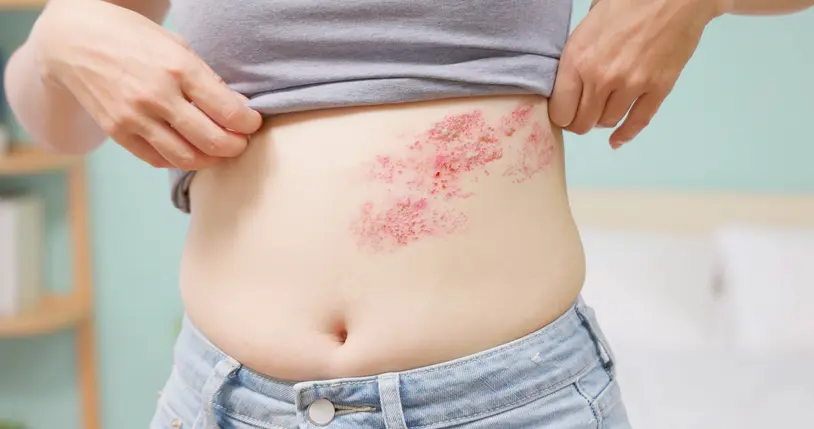
Herpes zoster, also known as shingles, is an inflammation of nerves and the surrounding area of skin caused by varicella zoster (chickenpox) virus infection.1 Shingles usually occurs when the dormant varicella zoster virus is reactivated in an adult who has recovered from chickenpox as a child.2
A painful rash most often begins on one side of the face or body and progresses to form blisters that usually scab over in seven to ten days. One to five days before the rash appears, there is often pain, itching or tingling in the areas where the rash later develops. Other symptoms of shingles can include fever, headache, chills and an upset stomach. Shingles typically clears up within two to four weeks.3
Individuals who have experienced and recovered from natural chickenpox as children usually have only one bout with shingles in their lifetime. However, in rare cases a second or even a third episode has been reported.4
Scientists do not understand the biological mechanisms underlying reactivation of varicella zoster infection, but risk factors are thought to include aging, autoimmune disorders, immunosuppression, and stress.56 Other populations at risk for developing shingles are those with weakened immune systems due to HIV/AIDS or other diseases that affect healthy immune function. Drugs used for organ transplants and cancer treatment can also increase the risk of shingles.7
Shingles most commonly occurs in individuals over 50 years of age.8 Today, after chickenpox vaccine has been widely used by children since 1995 and has interrupted natural circulation of the varicella zoster virus in the U.S. population,9 experts believe that half of Americans reaching 85 years of age will experience shingles at some point in their lifetime.10
The same varicella zoster virus that causes chickenpox causes herpes zoster (shingles) disease.11 Individuals who recover from chickenpox usually acquire long-lasting immunity to chickenpox.12 After recovery from chickenpox, the varicella zoster virus becomes dormant (inactive) and immunity to chickenpox is asymptomatically boosted when adults come into contact with children who have chickenpox. However, for reasons that doctors do not fully understand, in some individuals the dormant varicella zoster virus becomes active again and causes shingles.13
Individuals suffering with shingles cannot transmit shingles to others. However, someone who has never had chickenpox or the chickenpox vaccine can get chickenpox from a person with shingles.14 Herpes zoster is not caused by herpes simplex types 1 and 2 associated with cold sores and sexually transmitted genital herpes.15
IMPORTANT NOTE: NVIC encourages you to become fully informed about Shingles and the Shingles vaccine by reading all sections in the Table of Contents, which contain many links and resources such as the manufacturer product information inserts, and to speak with one or more trusted health care professionals before making a vaccination decision for yourself or your child. This information is for educational purposes only and is not intended as medical advice.