
I was invited by Dr. Joseph Ladapo, Florida’s Surgeon General, to make a Grand Rounds presentation on the informed consent ethic for employees of the Florida Department of Health on March 16, 2026 in Tallahassee. The title was “The Informed Consent Principle: A Guide for Public Health Policy and Medical Ethics.” I began with a video of a debate I had with a medical doctor from Johns Hopkins University about mandatory vaccination in 1997. After showing that national television debate, my commentary followed and the presentation ended with a short question and answer period with Dr. Ladapo.
I am beginning with this May 1997 debate because it was the first time that the subject of informed consent to medical risk taking was discussed on national television. 1 It was also the first time it was suggested that increases in chronic disease and disability among children might be associated with the administration of multiple doses of many different vaccines in early childhood. 2
Like the launching of the U.S. vaccine safety and informed consent movement in 1982 by parents of DPT vaccine injured children working with Congress on the National Childhood Vaccine Injury Act of 1986, 3 that debate was a forerunner of things to come.
Over the past 44 years I have eye-witnessed the latest chapter of the 230 year history of vaccination, both as a mother of a DPT vaccine injured son, the co-author of the 1985 book DPT: A Shot in the Dark (Harcourt Brace Jovanovich), and as a vaccine safety and informed consent advocate who has been at the table with representatives from government, medical trade and industry on federal vaccine advisory committees, and at the National Academy of Sciences Institute of Medicine, and testified in Congress and in state legislatures. 4
Through the charitable National Vaccine Information Center, I have worked with enlightened medical doctors and scientists, who have listened to parents of vaccine injured children and tried to convince their colleagues to do the methodologically sound research to fill in continuing significant knowledge gaps about vaccine side effects so the lives of the vaccine vulnerable can be spared, and to embrace the informed consent ethic, so that trust in public health policy and law can be restored.
The world of vaccines has changed dramatically since 1982 when I joined with other parents whose children were brain injured or died after severe reactions to the crude whole cell pertussis vaccine in DPT, a vaccine that was replaced after we lobbied for 14 years to get the less reactive acellular pertussis vaccine in DTaP licensed. Four decades ago, before the world wide web and cell phones became the new reality, medical doctors talked among themselves in the pages of medical journals about vaccine reactions, but the mothers bringing their children for DPT, polio and MMR shots were completely uneducated about disease and vaccine risks. Nobody talked about vaccine reactions or how to prevent them. When symptoms of a vaccine reaction occurred, those symptoms were dismissed by doctors as “normal.” And when there was a deterioration in health after vaccination, bad health outcomes were written off by doctors as a “coincidence” and unrelated to the vaccination just given.
Infants and toddlers are too young to talk. They cannot describe what they feel like after vaccination when they are burning up with a high fever, and screaming and arching their backs in pain, and having convulsions, and collapsing into unconsciousness as they suffer brain inflammation and encephalopathy and are never the same again. And when those children regress physically, mentally and emotionally after vaccination, the mothers know their children have changed before their eyes but there is no one to tell them why that happened, or what to do.
Actually, nothing much has changed in that respect.
More Educated Younger Generations
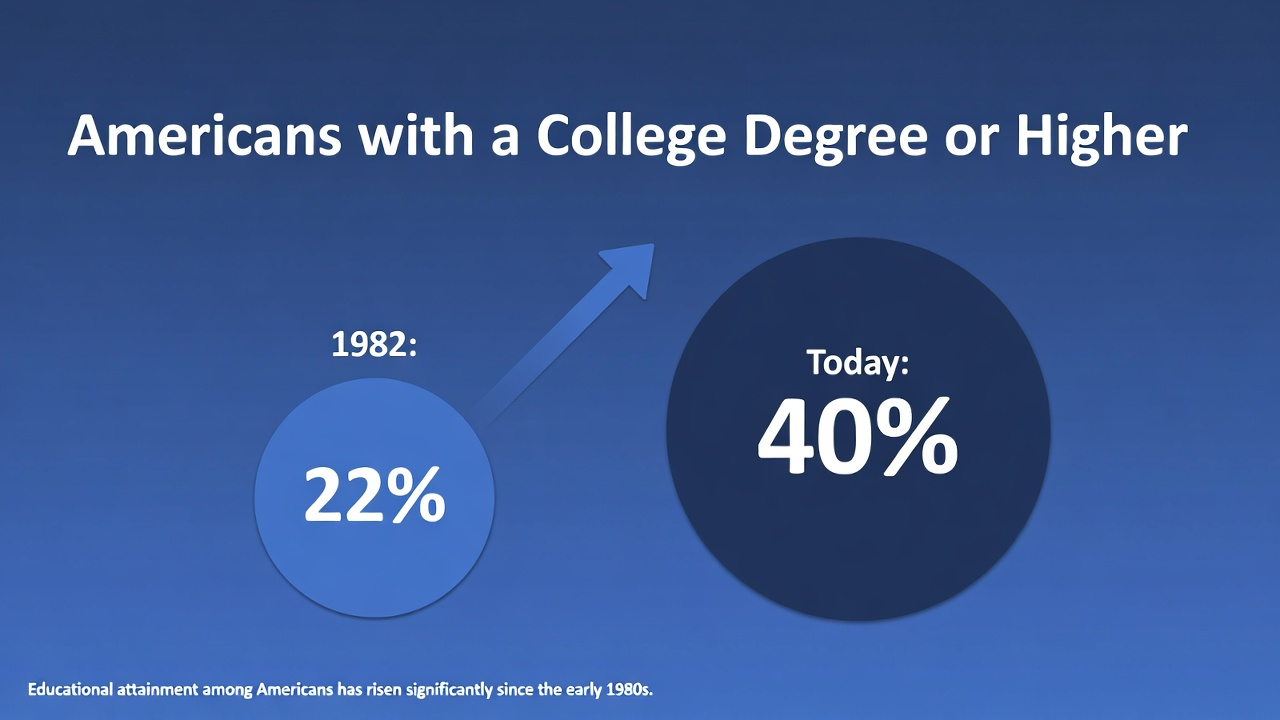 But today, there are more college educated mothers and fathers than any previous generation. Today, approximately 40 percent of Americans over age 25 have a college degree or higher compared to 22 percent in 1982. This higher education level has increased by 10 percent in the past decade alone. 5 With mass electronic communications and the Library of Medicine posted on the world wide web, these educated young Americans can do their own research if the risks of vaccination turn out to be 100 percent for them or their child.
And that is exactly what happened during the COVID pandemic response when our nation was traumatized by lockdowns, mandatory masking, online censorship of freedom of speech about the origin of SARS-CoV-2 virus, and mandatory use of an mRNA COVID biological product that was labeled a vaccine. 6 That product not only failed to prevent infection and transmission of SARS-CoV-2, but has been associated with over 1.6 MILLION COVID-19 vaccine adverse event reports, including heart and brain inflammation - and death - made to the federal Vaccine Adverse Event Reporting System known as VAERS. 7
With older children and adults initially the main target of the COVID vaccination campaign in which more than 80 percent got at least one dose 8 – and millions were threatened with loss of medical care and employment if they refused the COVID shot 9 - what changed was that these older Americans could describe in detail exactly what happened when the risks of a COVID shot turned out to be 100 percent for them. 10 11 12
Serious Crisis of Trust in Public Health Policy and Law
As many recent polls have revealed, in the third decade of the 21st century, there is a serious crisis of trust in public health policy and law. 13 Public perception of the safety and effectiveness of vaccination and the wisdom of mandatory vaccination laws is being challenged at the grassroots level. 14 15
This story is unfolding real time in state legislatures across the country. For the past few years, our organization has supported twice as many proposed vaccine-related bills that seek to protect informed consent rights than restrict or eliminate them. 16
Today, it is not just COVID shot recommendations that are being eyed with skepticism. There are questions about whether atypically manipulating the immune system to mount inflammatory responses over and over again by giving multiple doses of vaccines in early childhood and throughout life could be an important co-factor in the rise in chronic disease and disability in our society. There are unresolved issues discussed in the medical literature, such as asymptomatic infection and transmission of pertussis 17 and measles 18 in highly vaccinated populations that give evidence for waning immunity and also the evolution of microbes into vaccine resistant strains. 19 20 21 These facts are being debated even as efforts by-industry backed corporations to censor those conversations in the digital public square continues in this country and in Europe. 22 23
Reported Cases of Measles: There’s More to the Story
In Florida, there has been a lot of television publicity about 132 reported cases of measles in a population of 24 million people. 24 25 The national picture includes 1200 confirmed measles cases in a population of 342 million with 5 percent of cases hospitalized. 26 27 About 8 percent of those infected had received one or more MMR shots and 93 percent were unvaccinated or with an unknown vaccination status. 28 However, the number of those with “unknown vaccination status” is never released to the public.
These measles cases are occurring in a population where 92.5 percent of kindergartners have received two doses of MMR vaccine. That is a high measles vaccination rate that has persisted in the U.S. for decades and - in some states - now approaches 98 percent. 29
I come from the baby boomer generation. Nearly all of us got rubella, measles, mumps, and chickenpox by age 10, and I got whooping cough as a young adult after getting DPT shots as a child. All you have to do is dive into the medical literature and learn that there is a growing problem with sustaining measles vaccine acquired immunity in developed countries where - like in the U.S. – there have been long-standing high measles vaccination rates. 30 Just like with pertussis vaccine, 31 measles vaccine acquired immunity is waning. 32 There are mildly symptomatic and asymptomatic infections that occur among both the vaccinated and the unvaccinated, infections which are rarely identified and reported. 33
If you look at vital statistics data from the early 20th century, although measles can cause complications like pneumonia and brain inflammation, measles infections have never been a leading cause of death or disability in this country. 34 By the mid-20th century there were antibiotics to address complications and measles was not considered a big problem by most parents and clinicians in the U.S. or Europe, especially in healthy children.
1962 Microbe Hunters Describe Measles As Rarely Fatal
How many doctors know that in 1962, famous microbe hunters Drs. Alexander Langmuir and DA Henderson, who designed smallpox eradication campaigns, contemporaneously described measles as:
“a self-limiting infection of short duration, moderate severity and low fatality” that has “maintained a remarkably stable biological balance over the centuries.” 35
Dr. Langmuir calmly observed that:
“the decline in measles mortality demonstrates the degree to which we have adapted to this balance and have learned to live with this parasite.” 36
But then, boldly, proudly and with absolute confidence, he proclaimed:
To those who ask me, “Why do you wish to eradicate measles, I reply with the same answer that Hillary used when asked why he wished to climb Mt. Everest. He said, “Because it is there.” To this may be added, “…. and it can be done.” 37
Sixty-four years ago, Drs. Langmuir and Henderson were giving a heads up to the medical community that a measles vaccine was coming out soon. 38 And that the vaccine was going to be used by public health officials to not just control measles, but to launch a crusade to eradicate the virus from the earth with mandatory measles vaccination campaigns – just like they had done with smallpox vaccine.
From One Vaccine to Many More
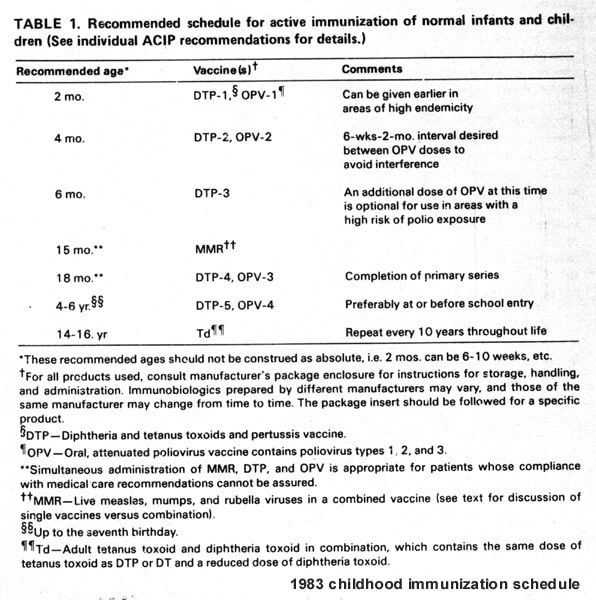
The crusade that began in the 19th century with one mandate for smallpox vaccine, by the mid-20th century, had expanded to measles vaccine, along with diphtheria, pertussis, rubella, mumps and polio vaccines. It quickly exploded in the late 20th and early 21st centuries from giving infants and children 23 doses of 7 vaccines between two months and six years old in 1983, 39 to over 70 doses of 17 vaccines given to children between the day of birth and age 18 today. 40
Past really IS prologue and one of the most important things I have learned is that remembering and understanding history is a way to avoid repeating it. Those of us who have lived history have a duty to communicate what we have learned for younger generations who will make history.
Love, compassion and respect for individual human life is the core of the ethical practice of medicine. The social contract we have with each other when we live in communities, whether we belong to a majority or minority, is to care about and protect the life of every individual living the community. With this in mind, I hope that for the next 40 minutes you will try to see through the eyes of individuals who either have suffered or watched a loved one suffer life-altering vaccine reactions - even death - or who simply deeply believe that autonomy and informed consent to medical risk taking are among the most important human rights.
Public Protests Against Mandatory Smallpox Vaccination
During the 19th century when morbidity and mortality from dreaded smallpox (variola major) infections began to decrease from injuring and killing between 10 and 30 percent of those infected like it did in the 17th and 18th centuries, 41 public protests and debates about compulsory smallpox inoculation were led by mothers and fathers in the U.S. and Great Britain. 42 43 44 Many of them were parents of once healthy children who had been seriously injured or died after being inoculated with live smallpox virus.
Eventually they were joined by community leaders and voices like Lora Little, a Minnesota mother of a smallpox vaccine injured son who died; 45 and Pennsylvania industrialist John Pitcairn; 46 as well as a few brave doctors and scientists like Britain’s Alfred Russel Wallace, co-discoverer of the principle of evolution through natural selection. 47 48 They were critical of the often crippling side effects of a product manufactured by the chemical industry that could unpredictably cause high fevers, heart and brain inflammation and eczema vaccinatum that covered the body in scarring smallpox-like open lesions and sometimes led to an agonizing death within days, weeks or months.49 50
Although famous military generals and politicians like George Washington and Thomas Jefferson promoted smallpox inoculation, there were pioneering thought leaders in the 19th and early 20th centuries who developed legitimate scientific and ethical arguments against compulsory vaccination that are still valid today.51 Just like those of us today who are not against vaccine availability but oppose vaccine mandates, they were ridiculed, discredited and persecuted by those protecting the politically powerful and profitable alliance between the chemical industry, medical trade, and governments. 52 And just like today, the “anti-science” label was slapped on them and anyone questioning the science and ethics of government-enforced use of a product that carries with it an often unpredictable risk of injury or death. 53 54
1809 – First Smallpox Vaccine Mandate in US
In 1809, the first mandate for citizens to get inoculated against smallpox was enacted by the state of Massachusetts. In 1855, that state’s legislature became the first to pass a law requiring children to show proof of smallpox inoculation to attend school. 55 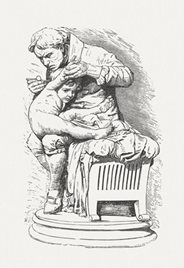
Because anything not defined in the US Constitution as being under federal jurisdiction defaults to the states, most public health laws are reserved to the states. 56 And one by one, the majority of state legislatures followed Massachusetts lead and voted to pass smallpox vaccination laws. The inability to get a school education became the most effective incentive for compliance, but adults were also compelled to get inoculated during smallpox outbreaks.
By 1905, a Lutheran pastor, Henning Jacobson, 57 refused the state of Massachusett’s order to be re-vaccinated or pay a five-dollar fine or face imprisonment. He and his son had suffered severe reactions to previous inoculations. He was concerned they would suffer worse reactions if they were revaccinated. Jacobson challenged the mandate and drove his case all the way to the U.S. Supreme Court, arguing that he and his son were genetically susceptible to smallpox vaccine reactions and that the law infringed on bodily autonomy and individual liberty.
The high-stakes ideological debate in Jacobson v. Massachusetts was dominated by medical doctors and government health officials who argued the utilitarian “greater good” rationale, which was very popular in academic and political circles at the time. 58 The utilitarian argument prevailed and was articulated in the U.S. Supreme Court majority opinion legally affirming the constitutional authority of state legislatures to pass mandatory smallpox vaccination laws.
In 1905 U.S. Supreme Court Rules States Can Force Vaccination
In a 7-2 split decision, the high court majority, which included Oliver Wendell Holmes, Jr., issued an opinion that gave U.S. state legislatures the legal right to assign police powers to state public health officials to restrict or eliminate individual liberty in order to “secure the general comfort, health and prosperity of the state.” 59
Comparing the war on smallpox with other kinds of wars that include a military draft, seven Supreme Court judges pointed out that during times of war a citizen:
“may be compelled, by force if need be, against his will and without regard to his personal wishes or his pecuniary interests, or even his religious or political convictions, to take his place in the ranks of the army of his country and risk the chance of being shot down in its defense.”
Parents trying to get their heads around that comparison, note that most of the citizen soldiers being forced to “risk the chance of being shot down” today are babies in newborn nurseries and little children who want to go to school.
The Supreme Court majority maintained that citizens do not have the right under the U.S. Constitution to be free at all times They said there are “manifold restraints to which every person is necessarily subjected for the common good.”
Therefore, they argued, all citizens can be compelled to receive smallpox vaccinations because the happiness and welfare of the majority outweighs the happiness and welfare of a minority. In other words, it was their opinion that natural rights like the right to autonomy and liberty - and even individual lives - can be sacrificed for what government officials have determined is the greater common good.
Supreme Court Affirms Infallibility of Medical Doctors
Georgetown law professor and mandatory vaccination proponent Lawrence Gostin has described the Jacobson ruling at the turn of the 20th century as the most important Supreme Court opinion in the history of American public health law. 60 That seminal ruling has been upheld and strengthened many times in court cases over the past century when mandatory vaccination laws have been challenged. 61 62 63
The high court judges dismissed Jacobson’s concern about being biologically and genetically more susceptible to being harmed if he was forced to obey the mandate. Instead, they chose to ignore biodiversity and affirm the infallibility of medical doctors by making this categorical statement
“The matured opinions of medical men everywhere, and the experience of mankind, as all must know, negative the suggestion that it is not possible in any case to determine whether vaccination is safe.”
If you take the time to read the majority opinion, it is characterized by a provincial view that medical doctors are omnipotent and incapable of error. The judges conveniently ignored the lack of scientific and medical knowledge about the unknown biological mechanisms and potential genetic or other high-risk factors involved in smallpox vaccine reactions that can cause individuals to suffer injury and death. 64 65 Instead, they insisted that police powers of the state must be employed to force a one-size-fits-all vaccine mandate to protect the health and security of the state.
121 years later, it is clear that the categorical statements those seven judges made in 1905 are unscientific, illogical and frightening.
Supreme Court Rules “Common Belief” Outweighs Scientific Evidence
While they dismissed concerns about the safety of smallpox vaccine as completely unfounded, they were clearly uncomfortable about Jacobson’s contention that his life was on the line. Not once, but repeatedly, they returned to the knotty problem of individual risk only to ridicule Pastor Jacobson and point out that his uneducated opinion was no match for the “common knowledge” expert opinion of medical doctors. In fact, the judges went so far as to say that - even if Jacobson could prove medical experts were wrong about the safety of smallpox vaccination - states still have the constitutional authority to use police powers to enforce laws based solely on majority opinion and “common belief” and not on truth or proven facts. They said:
“A common belief, like common knowledge, does not require evidence to establish its existence, but may be acted upon without proof by the legislature and the courts. The fact that the belief is not universal is not controlling, for there is scarcely any belief that is accepted by everyone. The possibility that the belief may be wrong, and that science may yet show it to be wrong, is not conclusive...for what the people believe is for the common welfare must be accepted as tending to promote the common welfare, whether it does in fact or not.”
Seriously.
I wonder how many legislators know that the 1905 Supreme Court ruling being used today to mandate vaccines and deny flexible medical, religious and conscientious belief exemptions, is based on the idea that “common belief” – not hard evidence - can rule the day?
The judges tried to defend their decision by explaining that if individuals like Jacobson were able to get exempted from vaccination, it would mean that:
“Compulsory vaccination could not, in any conceivable case, be legally enforced in a community, even at the command of the legislature, however widespread the epidemic of smallpox; and however deep and universal was the belief of the community and its medical advisors that a system of general vaccination was vital to the safety of all.”
And there it is again. The Supreme Court told state governments they can make vaccine laws based on “deep and universal” beliefs about vaccination, especially beliefs held by medical authorities, but can ignore deeply held religious beliefs or the beliefs of individuals with good reason to conclude they or their child will be harmed by vaccination.
Thousands of Years Debating What is True and Good
The individual liberty versus the collective “greater good” debate that played out at the turn of the 20th century in the Jacobson v. Massachusetts case is still being argued in the 21st century. 66 I call it the Vaccine Culture War. 67 But its origins go back thousands of years.
Although conversations about the meaning of life and what is good started before written history and is embedded in tenets of five surviving major religions - Hinduism, Buddhism, Islam, Judaism, and Christianity - it was the classical Greek philosophers who began recording the debate. 68 69
Socrates, Plato and Aristotle believed that we are physical matter animated by a vital spirit. They said we can use innate knowledge and reason to perceive what is good.
Epicurus disagreed. He believed humans are only physical matter and have no spirit or innate knowledge. He said that seeking pleasure and avoiding pain is the highest good and guide to moral behavior.
For 1500 years following the birth of Christ, the highest good was defined as knowing and loving God in western cultures adopting Judeo-Christian moral values articulated by philosophers like St. Augustine and Thomas Aquinas.
Then came the Scientific Revolution,70 when 15th and 16thcentury scientists like Copernicus, Galileo, Newton and Francis Bacon developed methods for determining what is true that put the existence of God on trial - along with the definition of what is good.
Between the 16th and 19th centuries, Descartes, Locke, Kant, Hegel and other philosophers argued that humans are both physical matter and spirit, and can use reason to understand scientific truth, as well as to perceive natural law that serves as a guide to what is good.
But the materialist philosophers Hobbes, Hume, Bentham, Comte, Marx and Nietzsche argued that science proves there is no God or human spirit because we are only physical matter, and there are no absolute moral values. Rather, science can be used to define what is true and good.
This included the idea that a mathematical equation can be used to determine whether or not an individual action, government policy, or law is moral.
Founders of U.S. Defend Natural Rights in U.S. Constitution
The authors of the U.S. Declaration of Independence agreed with the philosophers who argued that humans have a physical body animated by a soul or spirit, and that we can use reason given to us by God to perceive the natural law, which includes natural rights that belong to all individuals and limit the authority of government. 71
The Bill of Rights in the US Constitution contains strong language protecting exercise of natural rights, including freedom of thought, speech, conscience and religious belief. 7273 These have been defined internationally as human rights, which are acknowledged by governments. 74
Jeremy Bentham Mocks Natural Rights, Creates Philosophy of Utilitarianism
But today, it is not respect for natural rights that guides public health policy in the U.S., it is the philosophy of utilitarianism, created by Jeremy Bentham, a 19th century British attorney and social reformer. 75 Bentham mocked the U.S. Constitution for mentioning God and affirming natural rights protected in the First Amendment. 76 77
Like Comte, Marx and Nietzsche who followed him, Bentham did not believe that man has a soul or innate intelligence, so he returned to the hedonistic Epicurean philosophy of maximizing pleasure and minimizing pain to define what is good.
Bentham’s utilitarianism uses a mathematical equation that judges the rightness or wrongness of an action by its consequences. Bentham said that an action is onlymoral or ethical if it results in the greatest happiness for the greatest number of people. With its emphasis on numbers of people, Bentham created utilitarianism primarily as a guide for lawmakers making legislative policy.
Vaccine cost-benefit analyses are rooted in utilitarianism.78
Edward Jenner Invents and Advocates for Universal Smallpox Vaccination
Bentham was a contemporary of British physician Edward Jenner, who took pus from a cowpox lesion and scratched it onto the arm of a young boy in an effort to prevent smallpox. Jenner’s experiment, repeated over and over again in lots of people, created a live human-cow hybrid virus called vaccinia. The new chemical industry took that vaccinia virus, added some chemicals and bottled it, selling it to doctors and governments. 79 The mass smallpox vaccine campaigns that followed expanded the authority of a new branch of medicine focusing on a collectivist population-based disease control strategy called public health. 80 81
19th century physicians were enlisted by government health officials to give infants and children smallpox vaccine and were persuaded to look the other way when some of them died or were left permanently disabled after developing raging vaccinia virus infections and inflammation of the brain. Fully embracing the utilitarian rationale, public health officials in the 19th and early 20th centuries viewed individual smallpox vaccine casualties as acceptable losses to achieve the greatest good for the greatest number of people.
Supreme Court Justice Oliver Wendell Holmes Uses Utilitarian Ruling in Jacobson v Massachusetts to Endorse Eugenics in U.S.
But a stunning 1927 Supreme Court decision, which took place between World War I and World War II, highlighted the morally corrupt center of utilitarianism when then Chief Supreme Court Justice Oliver Wendell Holmes, Jr used the Jacobsonruling in Buck v. Bell to give the state of Virginia a green light to sterilize Carrie Buck. Carrie was a 17-year-old young single mother, who doctors and state social workers had incorrectly judged to be mentally retarded, just like her daughter and mother, they said. 82
Self-identifying as a Darwinian atheist and utilitarian, Chief Justice Holmes’s admiration for exercise of power is reflected in his legal opinions. Holmes did not believe in the concept of natural rights. He said:
“Between two groups of people who want to make inconsistent kinds of worlds, I see no remedy but force.” 83
He believed scientific knowledge should be used to improve the human race and declared
“I can imagine a future in which science… shall take control of life, and condemn at once with instant execution what now is left up to nature to destroy.” 84
And, so, when it came to Carrie Buck, Holmes, the eugenicist, coldly proclaimed:
“The principle that sustains compulsory vaccination is broad enough to cover cutting the Fallopian tubes.” 85
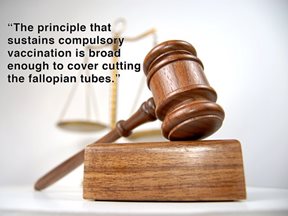
In this merciless 1927 Supreme Court decision – which has never been overturned and still stands - just as in the 1905 Jacobson v Massachusetts decision - Holmes achieved his goal of stripping cultural values and ethical principles from U.S. law. 86 His logic was that if utilitarianism could be used to enforce mandatory vaccination laws and immunize society against becoming infected with smallpox, then forced sterilization laws could be used to immunize society against becoming infected with bad genes.
The immoral utilitarian premise echoes the immoral Machiavellian premise that “the ends justifies the means.” 87 It creates a perfect climate for what becomes a tyranny of the majority. 88
Darwin’s theory of natural selection led to Social Darwinism 89 and eugenics that was viewed as a new science by intellectuals and social reformers during the 1920s and 1930s. 90 American biologist Charles Davenport had founded the Eugenics Record Office at Cold Spring Harbor Laboratory on Long Island in 1910 to improve the human race and soon courses on eugenics were offered at Harvard, Columbia, Cornell, Brown and other universities. The National Education Association had a Committee on Racial Well-Being to help teachers integrate eugenics content into public school textbooks. 91 92
By 1932, California and 28 other states had passed compulsory sterilization laws, and the practice of eugenics was endorsed by leading U.S. scientists, medical doctors, lawyers, professors, businessmen, politicians, philanthropists, and social reformers like Margaret Sanger. 93
Hitler Uses Utilitarian Rationale to Institute Eugenics Programs in Third Reich
The next year, in 1933, Hitler adopted eugenics as a central piece of his plan to protect the common good by eliminating individuals he considered to be a threat to the health, security and economic well-being of the State. By the time eugenics became politically incorrect in the 1940’s, physicians implementing government health policy had performed more than 60,000 involuntary sterilizations on mentally disabled or chronically ill Americans. 94
Hitler was influenced by Marx 95 and Nietzsche 96 and inspired by U.S. eugenics laws. He blended utilitarianism with social Darwinism and nationalism to create a view of the State as one biological entity or body that must be kept free from disease posed by unfit individuals who threaten national health, security and prosperity. 97
Enlisting the assistance of physicians and public health officials, the first minority considered unfit and expendable were severely handicapped children, the chronically sick and mentally ill - the “useless eaters” they were called. And when the reasons for why a person was identified as a threat to the health, economic stability, or security of the State grew longer to include minorities, who were too old or too Jewish, or too Catholic or too opinionated, or simply unwilling to believe what those in control of the State said was true….as the list of those the State branded as persons of interest to be demonized, feared, tracked, isolated and eliminated grew, so did the collective denial of those who had yet to be put on that list.
The 1947 Doctors Trial at Nuremberg Discredits Utilitarianism
When doctors were charged with crimes against humanity at the Doctors Trial at Nuremberg for carrying out horrific scientific experiments on captive children and adults in the concentration camps, including vaccine experiments, they pointed to U.S. eugenics laws and invoked a utilitarian defense. They claimed it was moral to sacrifice the health and lives of individuals to advance scientific knowledge that could save the lives of many more. 98 99
Utilitarianism was discredited as a pseudo-ethic in 1947 at The Doctor’s Trial at Nuremberg. Out of the Doctors Trial came the Nuremberg Code, of which Yale law professor and physician Jay Katz said:
“if not explicitly then at least implicitly, commanded that the principle of the advancement of science bow to a higher principle: protection of individual inviolability. The rights of individuals to thoroughgoing self-determination and autonomy must come first…“ 100
The First Principle of the Nuremberg Code is:
“The voluntary consent of the human subject is absolutely essential. This means that the person involved should have legal capacity to give consent; should be so situated as to be able to exercise free power of choice, without the intervention of any element of force, fraud, deceit, duress, over-reaching, or other ulterior form of constraint or coercion; and should have sufficient knowledge and comprehension of the elements of the subject matter involved to enable him to make an understanding and enlightened decision. “ 101
The Doctors Trial at Nuremberg put a human face on individual victims of immoral government health policies enforced by the Third Reich. The Nuremberg Code stands as an uncompromising affirmation of the value of every human life and the natural right to autonomy and self-determination. It is a timeless guide to ethical behavior by scientists, physicians and public health officials.
While the Nuremberg Code specifically addressed scientific experiments on human beings, the ethical principle of informed consent soon became accepted worldwide as the central ethical principle in the practice of clinical medicine. 102 103 In 1948, the natural rights to autonomy, protection of bodily integrity, and freedom of thought, conscience and religious belief were affirmed in the Universal Declaration of Human Rights. 104
While post-World War II Europe had to process what they had learned from the holocaust and forced scientific experimentation on captive human beings, things were very different in America. In our country, prominent members of our society who had promoted and participated in the practice of eugenics were never required to look in the mirror and reflect upon what they had done or face public disgrace.
Younger Generations Not Taught History of Utilitarianism and Eugenics in U.S.
Our perception of what is true and good is very much influenced by the prism through which we are taught to view the world.
In today’s public schools, education is focused on science and math, but the study of philosophy and its’ impact on human history is not valued or taught that often. There is no discussion about the kind of utilitarian thinking that made eugenics acceptable in America in the first part of the 20th century.
Few members of younger generations, who will steer our nation into the second half of the 21nd century, understand the ramifications of allowing utilitarianism to guide public health policy and law, even as the specter of genetic engineering to change what it means to be human is already underway.
Do they understand the influence of utilitarian philosophers like Dr. Peter Singer, professor of bioethics at Princeton, who says it is ethical to euthanize disabled babies in the first 30 days of life, and it is ethical to euthanize elderly and disabled persons who are not aware they serve no useful purpose in society, because, - he says - the life of a severely intellectually disabled person has no greater value than that of a dog or pig? 105
Science Is Not Perfect, Doctors Are Not Infallible, Vaccines Can Cause Harm
Our children are the future. The survival of humanity is advanced by the biological imperative that mothers and fathers want and need to protect their children and other children from being harmed for any reason.
In the 21st century, vaccination is hailed as the single most life-saving medical intervention ever in the history of medicine.106 But science is not perfect, doctors are not infallible, and vaccination is a medical procedure performed on a healthy person that carries a risk of injury or death.
And while we are all born equal in the eyes of our Creator and under the law, we are not all born the same. Each one of us is born with different genes 107 and a unique microbiome 108 influenced by epigenetics 109 that affects how we respond to the environments in which we live. The risks mandatory vaccination laws require us to take are not being borne equally by every person in society. A law which requires certain minority populations in society to take a greater risk of injury or death and, in effect, be forced to sacrifice their lives in service to the majority, is not just or moral. It is blatant discrimination.
Albert Einstein, who risked arrest in Germany in the 1930s when he spoke out against censorship and persecution of minorities, said:
“Never do anything against conscience even if the state demands it.” 110
There is no liberty more fundamentally a natural, inalienable right than the freedom to acquire knowledge and follow our conscience when choosing for what reason we are willing to risk our life or the life of our minor child.
Our conscience is what helps us judge whether an action we are thinking about taking is right or wrong. Conscience is that small voice deep inside us that, if we listen and have a desire to do the right thing, will steer us away from choosing to do something that causes harm.
God gave us free will. The journey we take on this earth is defined by the choices we make. If we are not free to follow our conscience and make choices, then the journey is not our own. And the choices we make that involve risk of harm to our physical body, which houses our mind and spirit, those are among the most profound choices we make, and why we must be free to make them.
Because if the state can tag, track down and force individuals to be injected with biologicals of known and unknown toxicity today, then there will be no limit on which individual freedoms the state will take away in the name of the greater good tomorrow.
Repeal Vaccine Mandates, Allow Law of Supply and Demand To Prevail
It is time to allow biological products like vaccines to be subject to the law of supply and demand, just like any other product sold in the marketplace.The vaccines that people consider to be safe, necessary and effective will be used and the vaccines the people consider to be unsafe, unnecessary and ineffective will not be used.
It is time to repeal mandatory vaccination laws and affirm personal liberty by codifying the ethical principle of informed consent to medical risk taking into U.S. public health policy and law. Because there are no exemptions to informed consent.
Preserving the Public’s Health Requires Respect for Personal Liberty
In 2005, professors of law and bioethics at Boston University published an article in the American Journal of Public Health entitled “Jacobson v. Massachusetts: It’s Not Your Great-Great Grandfather’s Public Health Law.” They said that “Jacobson was decided in 1905, when infectious diseases were the leading cause of death” and pointed out there were few tools like well-equipped community health facilities and antibiotics to address complications. They said:
“The public will support reasonable public health interventions if they trust public health officials to make sensible recommendations that are based on science and where the public is treated as part of the solution instead of the problem. Public health programs that are based on force are a relic of the 19th century; 21st-century public health depends on good science, good communication, and trust in public health officials to tell the truth. In each of these spheres, constitutional rights are the ally rather than the enemy of public health. Preserving the public’s health in the 21st century requires preserving respect for personal liberty.”
The state legislatures are where doctors can be liberated from being persuaded to act as agents of the state instead of remaining healers who first, do no harm. The state legislatures are where the people can be liberated from oppressive and discriminatory vaccine laws.
The federal government won’t do it. The courts won’t do it. The lawmakers we elect at the state level have the constitutional authority under the Tenth Amendment to end mandatory vaccination in America and reject the dangerous political ideology of utilitarianism that threatens our future.
The people are waiting for it. In their hearts and minds, they want to believe that doctors, public health officials and lawmakers care about them as individuals. They want to trust again, and the only way that can happen is to set them free.
Thank you for coming and respectfully listening to a different perspective on the science, policy and ethics of mandatory vaccination, and my thanks to Dr. Joseph Ladapo for inviting me to make this presentation. 111
References:
1 NBC Today Show. Live debate with Barbara Loe Fisher and Neal Halsey, MD moderated by Matt Lauer. May 1997.
2 Fisher BL. Statement on Vaccine Safety Research Needs – Perspective from Parents. Institute of Medicine Vaccine Safety Forum Public Workshop. National Academy of Sciences Apr. 1, 1996.
3 Fisher BL. 1986 National Childhood Vaccine Injury Act: Myth v. Fact. National Vaccine Information Center Jan. 4, 2024.
4 Fisher BL. Biography.
5 How Many People Had A College Degree Every Year Since 1971. 247Wallet May 20, 2021.
6 Fisher BL. Forced Vaccination Was Always the End Game. National Vaccine Information Center Sept. 22, 2021.
7 MedAlerts. Vaccine Types (Diseases): COVID-19 (COVID19, COVID19-2). 1,675,026 COVID-19 adverse event case reports to VAERS as of 2/27/2026. .
8 Stewart C. Percentage of U.S. population who had been given a COVID-19 vaccination as of April 26, 2023 by state or territory About 81.3%]. Statista Nov. 26, 2025.
9 Pettypiece S, Przbyla H, Egan L. Biden announces sweeping vaccine mandates affecting millions of workers. NBC News Sept. 9, 2021.
10 Mandavilli A. Thousands believe they suffered serious side effects from COV ID-19 vaccines. Daily Briefing May 6, 2024.
11 Rasmussen Reports. Millions Experienced COVID-19 Vaccine Side Effects. Nov. 21, 2025.
12 React19. 1640 Stories of COVID] Vaccine Injury. March 2026.
13 SteelFisher GK, Findling MG et al. Trust in US Federal, State and Local Public Health Agencies During COVID-19: Responses and Policy Implications. Health Affairs 2023; 42(3).
14 Van Beusekom M. Survey reveals growing American distrust in vaccines for COVID other infectious diseases. CIDRAP Aug. 29, 2024.
15 Jones JM. Far Fewer in U.S. Regard Childhood Vaccinations as Important. Gallup Aug. 7, 2024.
16 National Vaccine Information Center. NVIC’s 2024 State Vaccine Legislation Report: State Legislatures Lead the Way to Protect Informed Consent. Nov. 20, 2024.
17 Craig R, Kunkel E, Crowcroft NS et al. Asymptomatic Infection and Transmission of Pertussis in Households: A Systematic Review. Clin Infect Dis 2020; 70(1): 152-161.
18 Robert A, Suffel AM, Kucharski AJ. Long-term waning of vaccine-induced immunity to measles in England: a mathematical modelling study. Lancet Sept. 26, 2024.
19 Fisher BL. Pertussis Microbe Outsmarts the Vaccines As Experts Argue About Why. NVIC Newsletter Mar. 27, 2016.
20 Lercorvaisier F, Pontier D et al. Comparing frequency and Baysian methods to identify drivers of pathogen strain evasion: A temporal case study of pertussis in the United States. Infect Dis Model 2025; 11(2): 389-406.
21 Equils O, Kuliyev T et al. A commentary on measles vaccine in the context of outbreaks: Viral evolution, waning immunity and public trust. Human Vaccines Immunotherapeutics 2025; 21(1).
22 English C. COVID Censorship: Yes, Biden Administration Suppressed Free Speech During Pandemic. American Council on Science and Health Feb. 25, 2024.
23 Harper C. European Union to Use Digital Services to Act on Crack Down on Online Vaccine “Misinformation.” Reclaim the Net Apr. 28, 2025.
24 National Today. Florida Measles Cases Climb to 132 in Latest Report. Mar 13, 2026.
25 World Population Review. Florida population. March 2026.
26 National Today. Measles Outbreak Reaches Highest Since 2000. Mar. 9, 2026.
27 US and World Population Clock. March 2026.
28 CDC. Measles Cases and Outbreaks: Measles Cases in U.S. in 2026 Updated from CDC stats included in this Mar. 16 presentation]. Mar. 20, 2026.
29 CDC. Coverage with Selected Vaccines and Exemption Rates Among Children in Kindergarten – United States, 2023-24 School Year. MMWR Oct. 17, 2024; 73(41): 925-932.
30 Sourcheray S. Measles cases in Europe, the Americas skyrocket. CIDRAP Apr. 28, 2025.
31 Klein NP, Bartlett J, Rohani-Rahbar A et al. Waning Protection after Fifth Dose of Acellular Pertussis Vaccine in Children. NEJM 2012; 367: 1012-1019.
32 Robert A, Suffel AM, Kucharski AJ. Long-term waning of vaccine-induced immunity to measles in England: a mathematical modelling study. Lancet Sept. 26, 2024.
33 Leung J, Munir NA, Mathis AD et al. The Effects of Vaccination Status and Age on Clinical Characteristics and Severity of Measles Cases in the United States in the Postelimination Era, 2001-2022. Clin Infect Dis 2025; 80(3): 663-672.
34 National Center for Health Statistics. Leading Causes of Death 1900-1998: Mortality for 20 Leading Causes of Death, United States 1962. U.S. Center for Disease Control and Prevention 1998.
35 Langmuir AP, Henderson DA et al. The Importance of Measles as a Health Problem. Am J Public Health Nations Health 1962; 52(Suppl 2): 1-4.
36 Ibid.
37 Ibid.
38 Katz SL, Enders JF, Holloway A. The development and evaluation of an attenuated measles virus vaccine. Am J Public Health Nations Health 1962; 52(2) (Suppl 2): 5-10.
39 CDC. Recommended schedule for active immunization of normal infants and children 1983.
40 CDC. Advisory Committee on Immunization Practices Recommended Immunization Schedule for Children and Adolescents Aged 18 Years or Younger — United States, 2023. MMWR Feb. 10, 2023; 72(6): 137-140.
41 Davenport R. Cultures of Contagion and Containment? The Geography of Smallpox in Britain in the Pre-vaccination Era. The Anthropological Demography of Health Internet]. Oxford University Press 2020.
42 College of Physicians of Philadelphia. History of Anti-Vaccination Movements. Apr. 20, 2022.
43 Watson G. The anti-vaccination movement that gripped Victorian England. BBC Dec. 27, 2019.
44 Durbach N. Bodily Matters: The Anti-Vaccination Movement in England, 1853-1907. Duke University Press 2004.
45 Najera RF. Lora Little: The Vaccine Liberator. The College of Physicians of Philadelphia Feb. 10, 2017.
46 King C. Vaccination Abomination, or Vaccination Upholding the Nation? John Pitcairn and the Struggle Against Compulsory Vaccination. New Church History 2006.
47 Weber TP. Alfred Russel Wallace and the Antivaccination Movement in Victorian England. Emerg Infect Dis 2010; 16(4).
48 Colgrove J, Samuel SJ. Freedom, Rights and Vaccine Refusal: The History of an Idea. Am J Public Health 2022; 112(2): 234-241.
49 Roos KL, Eckerman NL. The Smallpox Vaccine and Postvaccinal Encephalitis. Semin Neurol 2002; 22(1): 095-098.
50 Belongia EA, Naleway AL. Smallpox Vaccine: The Good, the Bad and the Ugly. Clin Med Res 2003; 1(2): 87-92,
51 Fichman M, Keelan J. Resister’s logic: The anti-vaccination arguments of Alfred Russel Wallace and their role in the debates over compulsory vaccination in England, 1870-1907. Studies in History and Philosophy of Biological and Biomedical Sciences September 2007; 38(3): 585-607.
52 Esparza J, Lederman S et al. Early smallpox vaccine manufacturing in the United States: Introduction of the “animal vaccine” in 1870, establishment of “vaccine farms,” and the beginning of the vaccine industry. Vaccine 2020; 38(30): 4773-4779.
53 Harris J. Rash Decisions: Anti-vaccination movements in Historical Perspective. Origins (Ohio State University) October 2019.
54 Hotez PJ. Americans deadly flirtation with antiscience and the medical freedom movement. J Clin Invest 2021; 131(7).
55 Woodward SB. The Story of Smallpox in Massachusetts. Massachusetts Medical Society Nov. 14, 2016.
56 Congress.gov. Tenth Amendment to U.S. Constitution: The powers not delegated to the United States by the Constitution, nor prohibited by it to the States, are reserved to the States respectively, or to the people.
57 Landrigan L. Henning Jacobson Loses His Fight Over Vaccination. New England Historical Society 2026.
58 Slater J. History of Utilitarianism. Internet Encyclopedia of Philosophy.
59 U.S. Supreme Court. Jacobson v Massachusetts 197, U.S. 11 (1905).
60 Gostin LO. Jacobson v. Massachusetts at 100 Years: Police Power and Civil Liberties in Tension. Am J Public Health 2005; 95(4): 576-581.
61 U.S. Supreme Court. Zucht v. King 260 U.S. 174 (1922).
62 U.S. Supreme Court. Cude v. State of Arkansas 377 S.W.2d 816 (1964).
63 U.S. Law Explained. Jacobson v. Massachusetts: The Ultimate Guide to Vaccine Mandates and State Power. 2025.
64 Reif DM, McKinney BA, Mosinger AS et al. Genetic Basis for Adverse Events After Smallpox Vaccination. J Infect Dis 2008; 192(1): 16-22.
65 Cono J, Casey CG, Bell DM. Smallpox vaccination and adverse reactions, Guidance for Clinicians. MMWR Recomm Rep. Feb. 21, 2003; 52(RR-4): 1-28.
66 Conis E. Vaccination Resistance in Historical Perspective. The American Historian 2015 (August).
67 Fisher BL. The Vaccine Culture War in America: Are You Ready? National Vaccine Information Center Mar. 8, 2015.
68 Internet Encyclopedia of Philosophy.
69 Philosophy Basics. A Quick History of Philosophy.
70 Popular Social Science. The Scientific Revolution: How It Changed the World Forever.
71 Stoner JR. Natural Law, Natural Rights and American Constitutionalism: Declaration of Independence. The Witherspoon Institute 2011.
72 National Constitution Center. U.S. Constitution: First Amendment Bill of Rights. Ratified May 29, 1790.
73 Legal Clarity. Civil Rights Law: In What Way Are Natural Rights Protected in the Bill of Rights? July 6, 2025.
74 Weston BH. Human Rights. Britannica Mar. 6, 2026.
75 Krishna R. The Impact of Utilitarianism on Public Policy Formulation. IJDAR 2022; 9(1).
76 Hart HLA. Bentham and the United States of America. In: 1776: The Revolution in Social Thought. Journal of Law & Economics 1976; 18(3): 547-567.
77 Crimmins JE. Bentham on Religion: Atheism and the Secular Society. Journal of the History of Ideas 1986; 47(1): 95-110.
78 Faster Capital. Cost Benefit Analysis: The Utilitarian Approach to Decision Making. Apr. 11, 2025.
79 Raja N, Jothy AA. Edward Jenner’s Discovery of Vaccination: Impact and Legacy. Cureus 2024; 16(9).
80 Tulchinsky TH, Varavikova EA. A History of Public Health. The New Public Health 2014; 1-42.
81 Soled DR. Public Health in Context: A Critical History of the Smallpox Vaccine. Perspect Biol Med 2025; 68(4): 530-543.
82 U.S. Supreme Court. Buck v Bell, 274 U.S. 200 ((1927).
83 Holmes-Pollack Letters (1941). 2H – P.L. 36, 41. AZ Quotes: Oliver Wendell Holmes
84 Holmes, Oliver Wendall, Jr. A Soldier’s Faith. Harvard Graduation Address May 30, 1895.
85 U.S. Supreme Court. Buck v Bell, 274 U.S. 200 ((1927).
86 Uhlmann MM. The Darwinian Mind and Faith of Justice Holmes. Claremont Review of Books Spring 2001; 1(3). Book review of Law Without Values: The Life, Work and Legacy of Justice Holmes by Albert W. Olschuler].
87 History. Machiavelli. May 28, 2025.
88 Legal Clarity. Civil Rights Law: What Does Tyranny of the Majority Mean? Aug. 16, 2025.
89 Bowler P. Social Darwinism. Oxford Bibliographies May 26, 2016.
90 Bouche T, Rivard L. America’s Hidden History: The Eugenics Movement. Nature Sept. 18. 2014.
91 Selden S. Eugenics Popularization. Eugenics Archive Cold Spring Harbor Laboratory.
92 Farber SA. U.S. Scientists’ Role in the Eugenics Movement (1907-1939): A Contemporary Biologist’s Perspective. Zebrafish 2008; 5(4): 243-245.
93 Shivers A. Margaret Sanger: Ambitious Feminist and Racist Eugenicist. University of Chicago Sept. 21, 2022.
94 Black E. Eugenics and the Nazis – The California Connection. SF Gate Nov. 9, 2003.
95 Von Mises L. What the Nazis Borrowed from Marx. Foundation for Economic Education Jan. 28, 2019.
96 The Free Library. Nietzsche and the Nazis. 2008 Woodrow Wilson International Center for Scholars Apr. 4, 2026.
97 United States Holocaust Memorial Museum. The Biological State: Nazi Racial Hygiene, 1933-1939. Holocaust Encyclopedia.
98 Schultz JJ. The Doctor’s Dilemma: The Utilitarian Medical Ethics of Nazi Physician Karl Brandt. University of Toronto Journal 2013; 90(4): 176.
99 Annas GJ, Grodin MA. The Nazi Doctors and the Nuremberg Code. Oxford University Press 1992.
100 Katz J. The Consent Principle of the Nuremberg Code: Its Significance Then and Now. In: Nazi Doctors and the Nuremberg Code – Human Rights in Human Experimentation. Oxford University Press 1992: Page 236.
101 Shuster E. Fifty Years Later: The Significance of the Nuremberg Code. N Engl J Med 1997; 337: 1436-1440.
102 Annas GJ. Bodily Integrity and Informed Choice in Times of War and Terror. Boston University School of Law Spring 2003.
103 Hall DE, Prochazka AV, Fink AS. Informed consent for clinical treatment. CMAJ 2012; 184(5): 533-540.
104 United Nations. Universal Declaration of Human Rights. 1948.
105 Klusendorf S. Peter Singer’s Bold Defense of Infanticide. Christian Research Institute Apr. 16, 2009.
106 World Health Organization (WHO). Global immunization efforts have saved at least 154 million lives over the past 50 Years. Apr. 4. 2024.
107 Science of Bio Genetics. Exploring the Fascinating World of Genetic Uniqueness – Unraveling the Secrets of Our DNA. Dec. 20, 2023.
108 Williams S. Our bacteria are more personal than we thought. Stanford University Mar. 12, 2024.
109 Farsetti A, Illi B, Gaetano C. How epigenetics impacts on human diseases. European Journal of Internal Medicine 2023; 114: 15-22.
110 Einstein A. The Ultimate Quotable Einstein. Alice Calaprice, Ed. Princeton University Press 2010; P. 423. AZ Quotes.
111 Florida Department of Health. State Surgeon General Joseph Ladapo, MD, PhD. March 2025.





.png?width=782&height=440&ext=.png)


Leave a comment
Your email address will not be published. Required fields are marked with an *